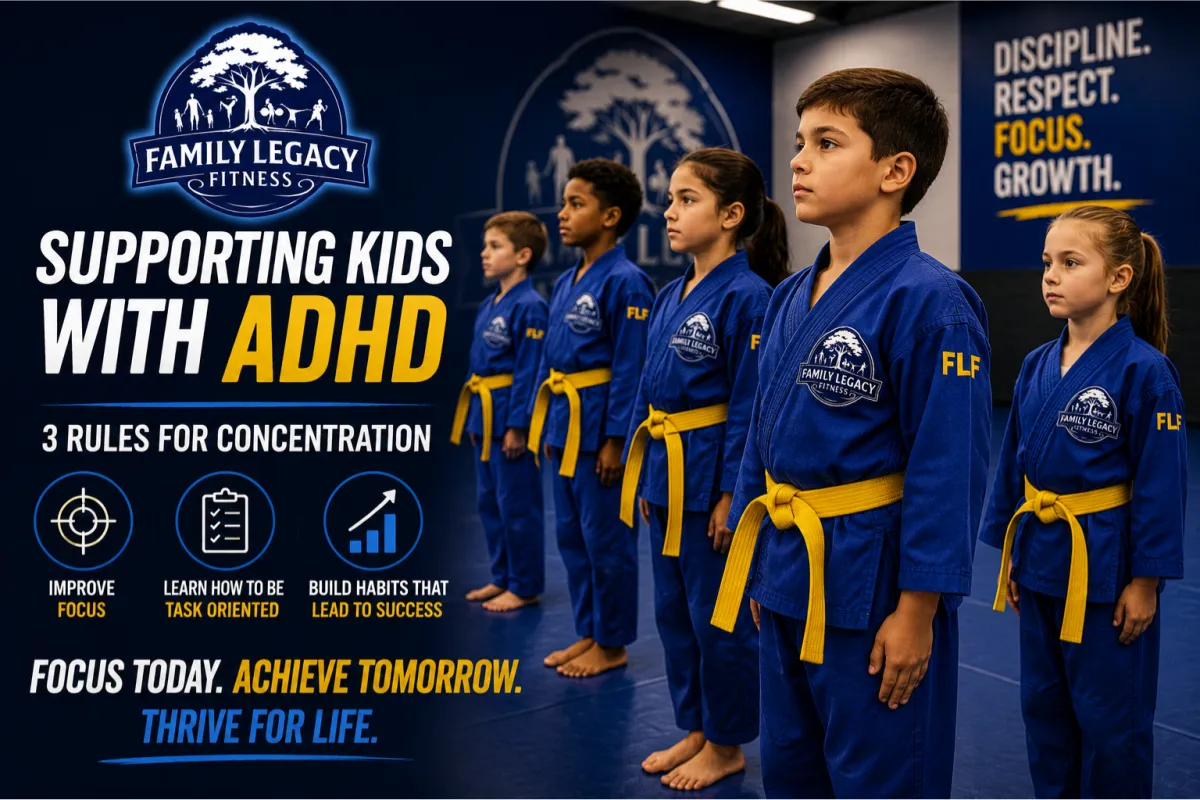
Can Martial Arts Help Children With ADHD? | Family Legacy Fitness
Can Martial Arts Help Children With ADHD?
A child with ADHD is not broken.
They are often bright, creative, energetic, curious, and full of potential.
But many parents know the daily challenges can feel overwhelming.
Difficulty focusing. Constant movement. Impulsiveness. Emotional frustration. Trouble sitting still. Difficulty following directions. Struggles at school. Challenges with confidence and friendships.
According to the American Psychiatric Association, ADHD commonly affects attention, impulse control, and hyperactivity. Research also shows that physical activity and structured movement can positively support focus, executive function, emotional regulation, and behavior in children with ADHD.
That is one of the reasons so many parents begin exploring martial arts.
At Family Legacy Fitness & Martial Arts, we have worked with many children throughout Manassas and Prince William County who struggle with focus, impulsiveness, emotional regulation, and confidence challenges connected to ADHD.
And while every child is different, we often see something powerful happen over time.
Kids who once struggled to stay engaged begin following directions more consistently. Children who felt frustrated by failure begin pushing through challenges. Students who constantly needed redirection begin learning how to channel their energy with purpose.
Not because martial arts is a “magic fix.”
But because martial arts training naturally develops many of the skills ADHD children often need help strengthening.
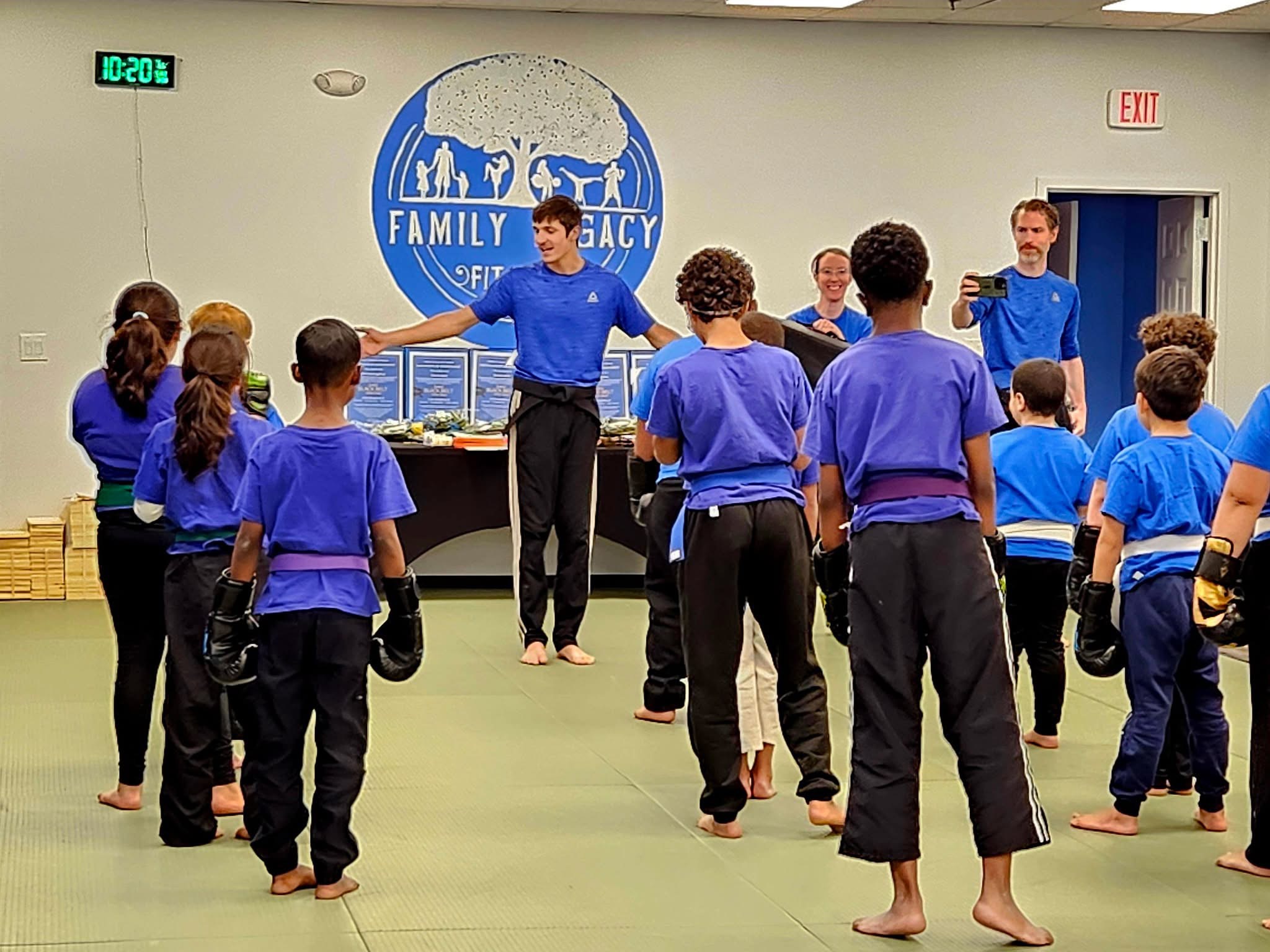
Why Martial Arts Works So Well for Many ADHD Children
Most traditional environments ask children with ADHD to suppress movement.
Martial arts does the opposite.
It gives movement structure, direction, purpose, and goals.
Research continues to show that physical activity can improve attention, executive functioning, inhibitory control, working memory, and emotional regulation in children with ADHD.
Martial arts combines physical movement with:
Repetition
Focus drills
Coordination
Listening skills
Goal setting
Body awareness
Emotional control
Structured routines
For many ADHD children, this combination is incredibly beneficial.
Instead of hearing “sit still” over and over again, children are encouraged to move with intention.
That shift matters.
ADHD Children Often Thrive With Structure
Children with ADHD frequently do better in environments that provide:
Clear expectations
Consistent routines
Immediate feedback
Short-term goals
Positive reinforcement
Engaging movement
Martial arts classes naturally provide all of these.
Every class has structure.
Students line up. Practice drills. Follow combinations. Learn patterns. Build toward belt progression. Repeat movements with focus and consistency.
Over time, these habits begin strengthening important executive functioning skills connected to attention, impulse control, and self-regulation. Research on exercise and martial arts interventions continues showing positive effects in these areas.
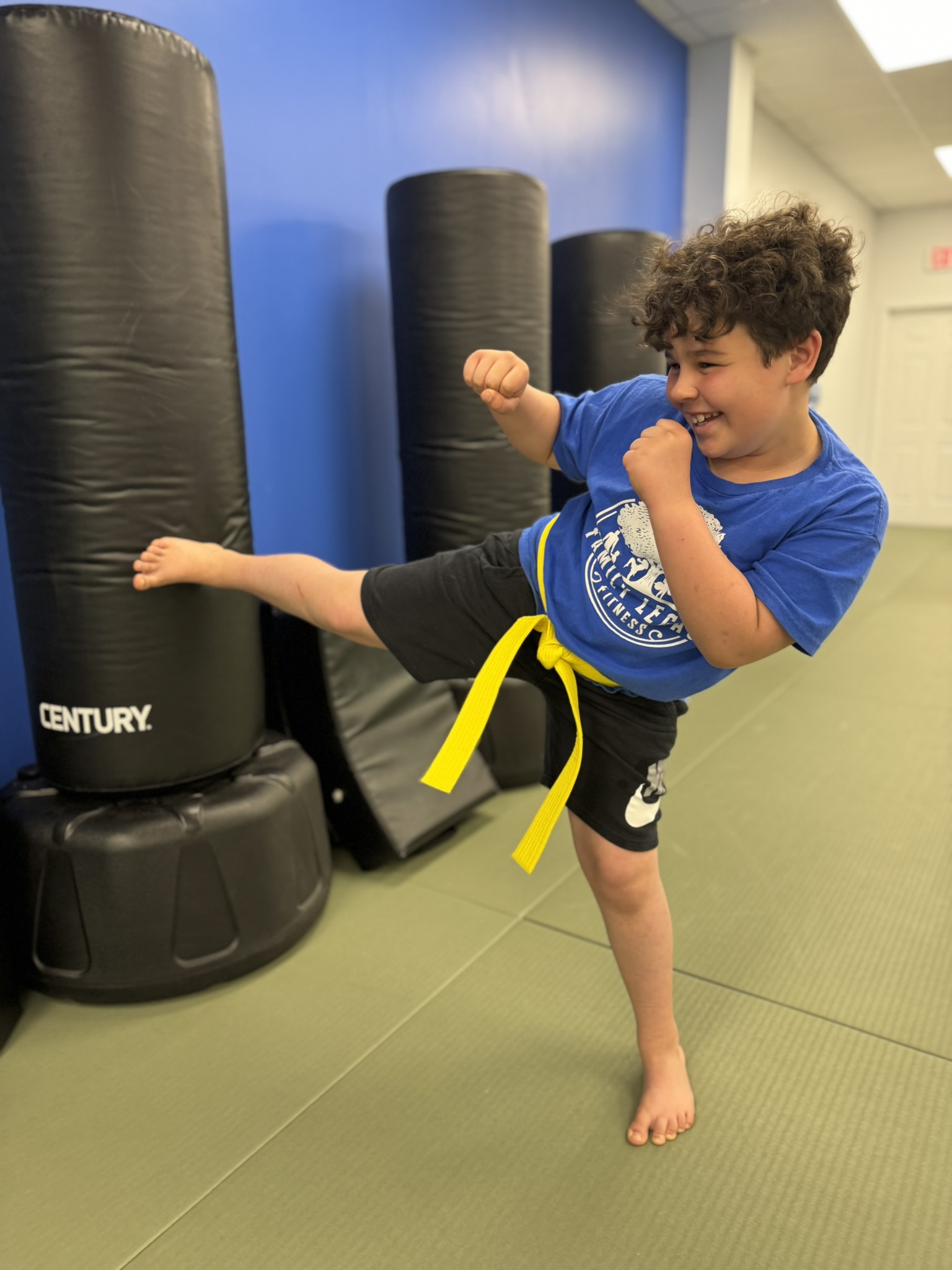
Confidence Changes Everything
Many children with ADHD spend years feeling corrected.
“Stop moving.”
“Pay attention.”
“Slow down.”
“You’re distracting the class.”
Eventually, some children begin believing they are the problem.
That is why confidence-building matters so much.
Martial arts gives children opportunities to succeed physically, mentally, and emotionally. They begin seeing progress. They earn belts. They complete drills. They improve coordination. They overcome difficult moments.
Little by little, they begin thinking:
“Maybe I actually can do this.”
That confidence often spreads into school, friendships, sports, and life outside the academy.
Physical Activity Supports Brain Health
The Centers for Disease Control and Prevention (CDC) explains that physical activity supports brain health, attention, emotional wellness, academic performance, and overall child development.
Additional research has shown that exercise interventions can help reduce ADHD symptoms while improving executive functioning and on-task behavior.
Martial arts training adds another layer because children are not simply exercising randomly.
They are learning:
Discipline
Timing
Coordination
Focus
Self-control
Respect
Problem-solving
Emotional awareness
The brain and body are working together constantly.
Martial Arts Teaches Emotional Regulation
One of the biggest misconceptions about martial arts is that it teaches aggression.
In reality, quality martial arts instruction teaches control.
Students learn:
How to pause before reacting
How to manage frustration
How to stay calm under pressure
How to respect boundaries
How to reset after mistakes
For many ADHD children, these become life-changing skills.
What Parents Often Notice First
Many parents are surprised that the first improvements are not always physical.
Sometimes they notice:
Better listening at home
Improved eye contact
More confidence socially
Better emotional control
Improved classroom behavior
Increased willingness to try difficult things
Better sleep after training
More positive self-talk
The transformation usually happens gradually.
But over time, those small changes add up in a big way.
Our Approach at Family Legacy Fitness
At Family Legacy Fitness, we understand that every child learns differently.
Our mission is not to force kids into a one-size-fits-all system.
We focus on helping children grow stronger physically, mentally, emotionally, and socially while strengthening family connection along the way.
Our classes blend:
Martial arts
Fitness
Self-defense
Leadership
Positive coaching
Teamwork
Confidence-building activities
We strive to create an encouraging environment where children with ADHD can move, learn, grow, and succeed without constantly feeling like they are “too much.”
Because many of these children are not lacking potential.
They simply need the right environment to channel it.
If your child struggles with focus, impulsiveness, confidence, or emotional regulation, martial arts may become one of the most positive influences in their growth journey.
Learn more or book a free trial class here:
Family Legacy Fitness Martial Arts Programs
“When we first started at Family Legacy Fitness, my son struggled with focus, emotional frustration, and confidence. School was becoming stressful, and we were constantly hearing about how difficult it was for him to stay on task. We wanted him to find something positive where he could build confidence and feel successful.
After a few months of training, we started noticing little changes that became huge changes over time. He began listening better, showing more confidence, and handling frustration differently. His teachers even commented on improvements in focus and behavior.
What we love most is that the instructors truly care. They challenge him while also encouraging him and helping him believe in himself. Martial arts has given him structure, friendships, confidence, and a place where he feels proud of himself.
Family Legacy Fitness has become more than an activity for our family. It has become part of our growth journey together.”
— Parent from Manassas
Frequently Asked Questions About Martial Arts and ADHD
Can martial arts really help children with ADHD?
Many parents report positive improvements after consistent martial arts training. Martial arts combines movement, structure, repetition, focus drills, goal setting, and positive coaching, which can help children strengthen attention, confidence, emotional regulation, and self-control. While martial arts is not a medical treatment for ADHD, it can become a powerful supportive activity for many children.
Why do kids with ADHD often enjoy martial arts?
Many children with ADHD struggle in environments where they are expected to sit still for long periods of time. Martial arts gives children a healthy outlet for movement while teaching them how to channel their energy with purpose. Classes stay active, engaging, and goal-oriented, which helps many students stay more involved and motivated.
Will martial arts help my child focus better at school?
Many parents notice improvements in listening skills, attention, classroom behavior, emotional control, and perseverance after consistent training. Martial arts teaches children how to follow directions, stay engaged during drills, complete tasks step-by-step, and work through challenges without giving up.
Is martial arts too intense for children with ADHD?
Not when the program is taught correctly.
A positive martial arts environment should feel encouraging, structured, and supportive. Great instructors understand that every child learns differently. Classes should challenge students while also helping them feel successful and included.
What type of martial arts is best for ADHD children?
There is no single perfect style for every child. Many kids benefit from programs that combine fitness, self-defense, coordination, focus training, teamwork, and structure. At Family Legacy Fitness Martial Arts Programs, our classes blend multiple disciplines to keep students engaged while helping them build confidence and discipline.
How long does it take to see improvements?
Every child is different. Some parents notice changes within a few weeks, while others see gradual growth over several months. Confidence, focus, discipline, and emotional regulation are skills developed through consistency and repetition over time.
Will martial arts make my child more aggressive?
Quality martial arts programs actually teach the opposite. Students learn self-control, respect, emotional awareness, and how to stay calm under pressure. Martial arts helps children develop confidence without needing to act aggressively.
Can shy or socially anxious children benefit too?
Absolutely. Many shy children thrive in martial arts because classes provide structure, encouragement, teamwork, and small victories that help build confidence over time. Students often improve social skills naturally as they train alongside supportive classmates.
Founder,Family Legacy Fitness & Martial Arts
Where Families Grow Stronger Together 💙
Follow Us:
Get Started Today with a Free Lesson!
Sponsored byNext 1UP Marketing